
Aga Khan University Hospital Raises the Bar for Quality Care and Medical Travel

Audio By Vocalize
The Aga Khan University Hospital, Nairobi (AKUH, N), has been reaccredited by the Joint Commission International (JCI) for the fifth consecutive time, reaffirming its position as a regional leader in quality care, patient safety, and clinical excellence.
AKUH, N was the first hospital in East Africa to achieve the prestigious JCI accreditation in 2013 and has since been successfully reaccredited every three years.
This continued recognition underscores the hospital’s unwavering commitment to safe, reliable, and patient-centred care benchmarked against the highest international standards.
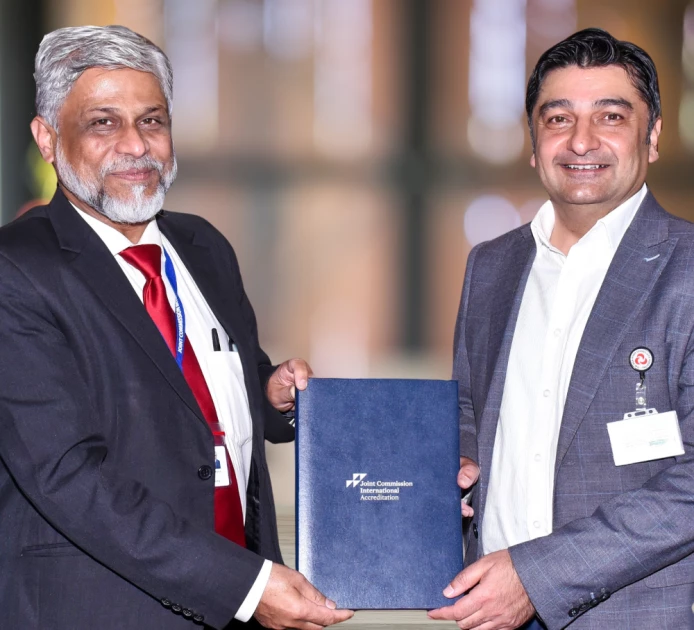
“By opening
ourselves to an external, internationally recognised audit process—and
consistently meeting those standards—we demonstrate our commitment to
benchmarking our care against the best hospitals globally,” said Rashid
Khalani, Chief Executive Officer, AKUH, N.
The hospital’s latest reaccreditation is part of a broader strategy to further enhance quality care and strengthen medical travel to Kenya and the region.
JCI
accreditation is widely regarded as the gold standard in healthcare quality,
placing AKUH, N among leading medical institutions worldwide.
“Patient care is ultimately dependent on clinical outcomes—not the quality of buildings or equipment alone,” said Khalani.
“The accreditation means inviting an
independent external body to assess your systems, standards, processes,
workforce, qualifications, and training. This allows you to measure yourself
against the best in the world.”
He added that quality remains central to the hospital’s mission.
“This is what the Aga
Khan University Hospital’s quality journey is about. We invest in people, we
invest in technology and systems, and we invest in quality to ensure care is
consistently standardised.”
The JCI
accreditation positions Aga Khan University Hospital as an internationally
recognised medical institution, offering patients care comparable to that
provided in Europe and North America.
“When a
patient walks into Aga Khan University Hospital, they should receive the same
quality of care they would expect in North America or Europe,” said Khalani,
noting that healthcare is deeply personal and trust is essential.
AKUH, N is
also keen to strengthen confidence in Africa’s healthcare systems and reduce
the need for patients to seek treatment abroad.
“Many
people still travel outside Africa for healthcare because services may not be
available locally, trust in care may be low, or quality may be inconsistent,”
said Khalani. “This is the perception we are working to change.”
He added,
“We want African patients to have the confidence that they can come to Nairobi,
Kenya, and receive the same quality of care they would get abroad.
Accreditation provides that confidence through independent external
validation.”
Over the
past five years, Aga Khan University Hospital has significantly strengthened
its specialised training programmes, ensuring the availability of highly
skilled specialists to deliver quality care.
“Treating
patients alone is not enough. To build a sustainable healthcare system and make
lasting impact, you must train doctors and nurses,” said Khalani.
The hospital began with postgraduate training through a four-year residency programme in nine disciplines and later introduced an undergraduate medical programme three years ago.
It has since expanded to offer 15 specialised
clinical fellowship programmes, including medical oncology, haematology,
neurology, gastroenterology, neonatology, paediatric neurology, cardiology,
nuclear medicine, and onco-pathology.
To further
support medical travel within Africa, Aga Khan University Hospital has
partnered with Kenya Airways, enabling patients across the continent to access
AKUH, N’s advanced medical services.
“Kenya Airways flies to over 32 destinations across Africa, connecting nearly half a billion people through Nairobi,” said Khalani.
“Through this partnership,
patients travelling to Aga Khan University Hospital will benefit from
preferential airfares, medical evacuation support where required, and
accommodation arrangements through our hotel partners.”
Aga Khan
University Hospital, Nairobi, currently operates a network of 50 medical
centres across Kenya.
Join the Discussion
Share your perspective with the Citizen Digital community.
No comments yet
This discussion is waiting for your voice. Be the first to share your thoughts!