
125 richest Kenyans hold more wealth than 42.6 million people - Oxfam
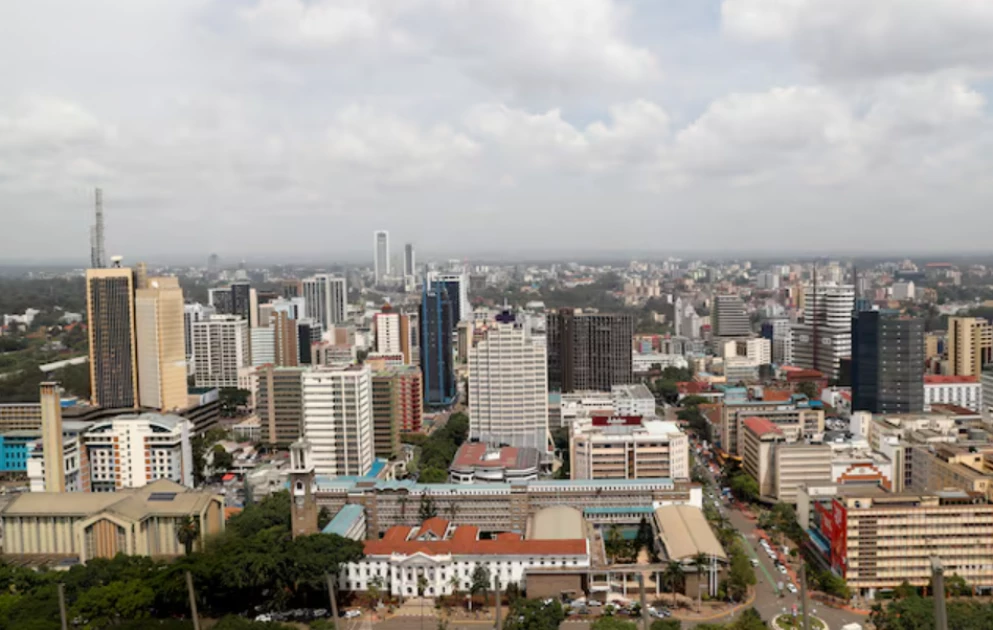
A general view shows the central business district in downtown Nairobi, Kenya February 18, 2022. REUTERS/Thomas Mukoya

Audio By Vocalize
The report also shows that Kenya’s richest 125 people own more wealth than 42.6 million people, amidst deepening poverty levels.
If the wealth held by the richest 125 Kenyans were converted to Ksh.100 notes, it would be enough to cover almost the entirety of Nairobi County. A CEO in the ten biggest companies earns, on average, 214 times more than a teacher.
A report named Kenya’s Inequality Crisis: The Great Economic Divide was released on Wednesday, November 11, 2025, showing that the number of people living in extreme poverty has increased by 7 million (37%) since 2015.
The findings also show that massive underfunding of education, healthcare and agriculture in favour of debt repayment has contributed to widening the gap between the super-rich and those living in extreme poverty.
In 2024, out of every Ksh.100 taken in taxes, Ksh.68 was used to repay debt -- twice the education budget and nearly 15 times the national health budget.
As a result, children from the poorest 20% of households receive almost five fewer years of schooling than those from the richest 20%.
The amount of money per pupil that the government spends on primary schools is equivalent to just 18% of what it was in 2003.
The report shows that only 4 million in a population of over 53 million people contribute actively to the compulsory Social Health Insurance Fund (SHIF) and are eligible for healthcare access.
Private health providers reap the most from this contributory health insurance. In 2024, only 20% of national health insurance money went to public health facilities that serve the majority of Kenyans seeking medical services.
Oxfam Kenya Executive Director Mwongera Mutiga notes that inequality is not a natural condition; it is a deliberate outcome of unjust policies and political inaction.
“The gap between the rich and the poor has been allowed to grow unchecked, while millions struggle just to survive. This injustice is no longer tolerable. It is time for bold, decisive action. Reducing inequality is not only possible—it is urgent, necessary, and long overdue,” Mutiga said.
The past ten years, 2014-2024, have seen an exponential rise in food shortages, with 17 million people now facing severe and moderate food insecurity, amidst relentless climate emergencies.
The cost of food is 50% higher than it was in 2020, hitting those with the least money. In Nairobi, the inflation rate for low-income earners was 27% higher than that of upper-income earners in 2020–24.
Vulnerable populations are living on the edge, with only 9% of Kenyans covered by at least one form of social protection.
Among the poorest 20%, only a fifth receive social assistance. Inua Jamii, the biggest state-funded social assistance programme, which supports about 1.9 million people, has yet to revise the current monthly Ksh. 2,000 per beneficiary, while the annual inflation rate has risen to 4.6 per cent according to the Central Bank of Kenya reports.
The Kenyan job market is awfully volatile, with 85% of the country’s workforce being informal. This has continued to power significant pay and gender gaps, as well as declining wages.
The likelihood of securing well-paying jobs today is highly dependent on family background and solid connections. Women face barriers to entry into the paid labour force due to the unpaid care workload and social norms. They account for 38% of the formal workforce, with their total labour income share at just 62% that of men.
The report also reveals that, on average, women are five times more likely to be doing unpaid jobs than men, with less than a third of women owning a house either alone or jointly.
According to the report, the government’s revenue collection policies keep draining those who need support the most and cushioning the rich. For example, in 2023, the government introduced new flat-rate taxes on housing and health, which mainly affected low-income earners, and gave property owners some breathing space by reducing the tax rate on rental income by 2.5 percentage points.
Furthermore, consumption taxes such as VAT, which disproportionately affect the poorer members of the population, account for more than half of the national revenue.
The report also shows that colonialism and its persistent legacies have contributed to high inequality in Kenya, where colonialism concentrated economic and political power in the hands of a few white settlers while systematically excluding and disempowering local communities.
The report recommends that by reducing inequality at a rate of 2% annually, accompanied by 2% annual growth rate, the government can triple the rate of extreme poverty reduction, compared to the current 2% economic growth alone.
Another is that the government should raise the education budget to at least 20% of government expenditure and increase capitation per student, something that would match the current annual inflation.
Also, scaling up the health budget to 15% of total government expenditure as a minimum and aligning health financing policies to progressively achieve Universal Health Coverage, focusing on population-wide access to quality essential health services without financial hardship, would greatly enable healthcare access for many citizens.
"Inequality is not inevitable—it is a choice. With bold leadership, the right policies, and unwavering political will, Kenya can build a future where every person thrives. By embracing progressive taxation, investing in universal education and healthcare, creating dignified jobs, and advancing land justice, we can create a nation that is not only more equal but truly free from poverty. A fairer Kenya is within our reach—let's choose it", added Mwongera.
Join the Discussion
Share your perspective with the Citizen Digital community.
No comments yet
This discussion is waiting for your voice. Be the first to share your thoughts!