

Kenya rolls out digital livestock reforms as drought risks grow
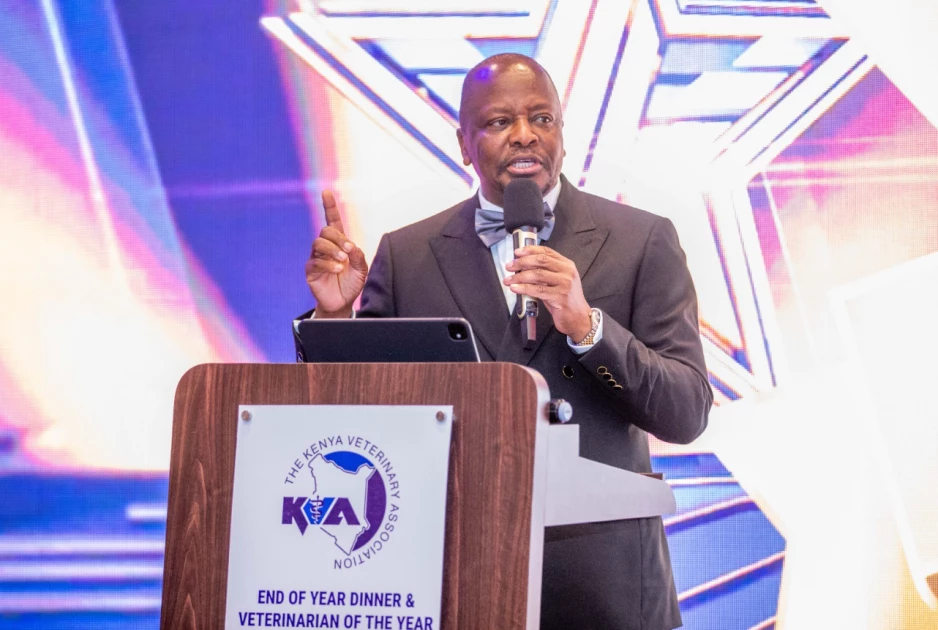
Agriculture and Livestock Development CS Mutahi Kagwe speaks during the Veterinarian of the Year Awards in Nairobi.

Audio By Vocalize
The government has unveiled sweeping digital reforms aimed at transforming Kenya’s livestock sector and reducing losses from drought, disease and weak surveillance systems.
Speaking during
the Veterinarian of the Year Awards in Nairobi, Agriculture and Livestock
Development Cabinet Secretary Mutahi Kagwe said the country is shifting from
reactive crisis response to proactive, data-driven preparedness.
He announced plans
to roll out digital animal traceability for all livestock, supported by a
centralised national data platform and stronger county veterinary networks.
Kagwe warned that
delayed interventions after animals have already died are costly and
unsustainable, urging counties, the private sector and development partners to
collaborate ahead of the next drought season.
He said the
reforms are designed to help predict risks early, improve disease surveillance
and protect pastoralist communities in arid and semi-arid regions.
However, the Kenya
Veterinary Association (KVA) raised concern over a severe shortage of
veterinary professionals, saying it threatens public health, food safety and
animal welfare.
The association
noted that low pay and harsh working conditions have worsened staffing gaps,
limiting early detection and response to diseases such as foot-and-mouth
disease and Rift Valley fever.
KVA National
Chairman Dr. Kelvin Osore said Kenya has only about 2,800 veterinary surgeons
and 17,000 technicians, with fewer than 200 vets employed by national and
county governments.
“Veterinary
services are essential public goods, and without adequate staffing, a resilient
animal health system is impossible,” he said.
CS Kagwe
acknowledged the challenge, saying the success of the digital overhaul depends
heavily on addressing human resource gaps.
He called for
urgent policy action, improved recruitment and better incentives to attract and
retain veterinary officers.
KVA also
highlighted progress in its engagement with the government on the national
vaccination programme, which now allows private veterinarians to administer
vaccines. Officials say this could significantly improve disease control and
boost Kenya’s livestock export prospects.
The association
has also confirmed bidding to host the 2028 World Veterinary Congress in
Nairobi, with government backing already secured.
It is further pushing
for passage of key laws, including the Animal Health Bill and the Animal
Welfare and Protection Bill, to modernise outdated legislation.
If fully
implemented, the digital reforms could mark one of the most significant shifts
in livestock management in decades, offering new hope to farmers facing an
increasingly unpredictable climate.
Leave a Comment