
How women's padel tennis clinics are opening doors to Kenya's fastest-growing sport

Audio By Vocalize
More women are taking up padel in Kenya as ladies-only coaching clinics create safe, affordable spaces for beginners to learn one of the world’s fastest-growing racket sports.
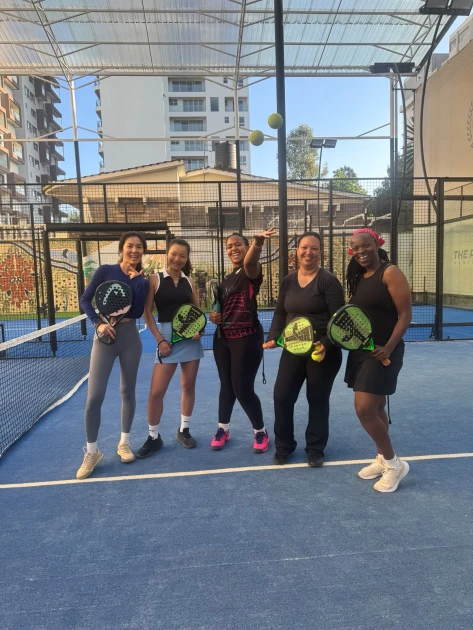
Certified padel coach Cherryl Fouasso, who runs the weekly Ladies’ Padel Clinic at Padel Point in Nairobi, says the initiative was launched to encourage more women to embrace the sport in a safe and welcoming environment.
Held every Tuesday, the 60-minute sessions cost KSh1,500, covering coaching, court fees, rackets and balls, making them one of the most affordable ways to learn padel in Kenya. Many participants say they discovered the clinic through her social media platforms.
“My goal with the ladies’ clinic is to encourage more ladies to play. Padel can be expensive, but this gives women the opportunity to receive coaching from a certified coach in a welcoming environment. A lot of women feel safer when it’s just women learning together,” Fouasso said.
Padel, a racket sport invented in Mexico, has grown rapidly worldwide and is now played in more than 130 countries, according to the International Padel Federation. In Kenya, the sport continues to gain popularity through new courts, tournaments and the formation of the Kenya Padel Federation.
Fouasso said she started the clinic after noticing the large disparity between men’s and women’s participation in local competitions.
“You could find more than 70 men registered in one tournament category and fewer than 20 women in the women’s category. This clinic is my small contribution towards changing that,” she said.
The sessions are limited to four players to ensure personalised coaching, while participants stay connected through a WhatsApp group where they organise matches and support each other’s progress.
Certified padel coach Cherryl Fouasso, who runs the weekly Ladies’ Padel Clinic at Padel Point in Nairobi, says the initiative was launched to encourage more women to embrace the sport in a safe and welcoming environment.
Held every Tuesday, the 60-minute sessions cost KSh1,500, covering coaching, court fees, rackets and balls, making them one of the most affordable ways to learn padel in Kenya. Many participants say they discovered the clinic through her social media platforms.
“My goal with the ladies’ clinic is to encourage more ladies to play. Padel can be expensive, but this gives women the opportunity to receive coaching from a certified coach in a welcoming environment. A lot of women feel safer when it’s just women learning together,” Fouasso said.
Padel, a racket sport invented in Mexico, has grown rapidly worldwide and is now played in more than 130 countries, according to the International Padel Federation. In Kenya, the sport continues to gain popularity through new courts, tournaments and the formation of the Kenya Padel Federation.
Fouasso said she started the clinic after noticing the large disparity between men’s and women’s participation in local competitions.
“You could find more than 70 men registered in one tournament category and fewer than 20 women in the women’s category. This clinic is my small contribution towards changing that,” she said.
The sessions are limited to four players to ensure personalised coaching, while participants stay connected through a WhatsApp group where they organise matches and support each other’s progress.
Since launching the programme, Fouasso has coached more than 150 players, many progressing from complete beginners to intermediate level. Her classes have grown from mostly expats to embracing a community of local Kenyans.
One of them is Riya Gudhka, a digital marketer who joined the clinic six weeks ago without any previous experience in padel. She now attends weekly sessions and has added private coaching to improve her skills.
“I came from playing no padel at all to now being able to at least hit the ball. Cherryl teaches you through every mistake without making you feel like you’re doing something wrong. It’s just about having fun while you’re playing,” Gudhka said.
For Rachel Olivierre, a project coordinator, the women-only environment removed the intimidation of trying a new sport after she came across the clinic on Instagram and has since become a regular participant.
“When I saw it was a women’s clinic, I thought I could try it safely. It creates a safe space for women who want to exercise, build confidence and slowly create a community,” she said.
Student pilot Silvia Mute said the clinic has helped her remain consistent with a sport for the first time while giving her confidence to step outside her comfort zone.
“When I first came here, I didn’t know anyone and I knew nothing about padel. The more you play, the more confident you become. You don’t have to wait for someone to join you. Just go for it,” Mute said.
Demand for the clinic has continued to grow, with Fouasso expanding from one or two participants per session to four fully booked classes every Tuesday. She hopes to introduce more training days and eventually take the programme to Mombasa, Nanyuki and other parts of East Africa.
Away from coaching, Fouasso has competed in more than 30 local tournaments, finishing in the top three in about 70 per cent of them. She has also represented Kenya at international events, including the Tanzanite Open and the FIP Bronze tournaments in Nairobi and Dakar.
One of them is Riya Gudhka, a digital marketer who joined the clinic six weeks ago without any previous experience in padel. She now attends weekly sessions and has added private coaching to improve her skills.
“I came from playing no padel at all to now being able to at least hit the ball. Cherryl teaches you through every mistake without making you feel like you’re doing something wrong. It’s just about having fun while you’re playing,” Gudhka said.
For Rachel Olivierre, a project coordinator, the women-only environment removed the intimidation of trying a new sport after she came across the clinic on Instagram and has since become a regular participant.
“When I saw it was a women’s clinic, I thought I could try it safely. It creates a safe space for women who want to exercise, build confidence and slowly create a community,” she said.
Student pilot Silvia Mute said the clinic has helped her remain consistent with a sport for the first time while giving her confidence to step outside her comfort zone.
“When I first came here, I didn’t know anyone and I knew nothing about padel. The more you play, the more confident you become. You don’t have to wait for someone to join you. Just go for it,” Mute said.
Demand for the clinic has continued to grow, with Fouasso expanding from one or two participants per session to four fully booked classes every Tuesday. She hopes to introduce more training days and eventually take the programme to Mombasa, Nanyuki and other parts of East Africa.
Away from coaching, Fouasso has competed in more than 30 local tournaments, finishing in the top three in about 70 per cent of them. She has also represented Kenya at international events, including the Tanzanite Open and the FIP Bronze tournaments in Nairobi and Dakar.
Alongside Sharon Juma, she forms Nala Padelistas, a women’s padel duo working to inspire more women to join the sport and promote its growth in Kenya.
“I’ve seen students who couldn’t even hold a racket now playing matches. That’s the fulfilment for me,” Fouasso said.
She encouraged more women to take the first step, saying, “I’d encourage a lot of women to join. It’s a fun way to keep fit, network and work out in a safe space with other women.”
“I’ve seen students who couldn’t even hold a racket now playing matches. That’s the fulfilment for me,” Fouasso said.
She encouraged more women to take the first step, saying, “I’d encourage a lot of women to join. It’s a fun way to keep fit, network and work out in a safe space with other women.”
Join the Discussion
Share your perspective with the Citizen Digital community.
No comments yet
This discussion is waiting for your voice. Be the first to share your thoughts!